Blog

  • 7 Sustainable Weight Loss Tips That Actually Work (No Crash Diets)

    7 Sustainable Weight Loss Tips That Actually Work (No Crash Diets)

    Crash diets promise fast results, but most people know how the story ends: the weight comes back, and often brings friends. Real, lasting weight loss works differently. It comes from small habits you can keep for months and years, not from rules you can only follow for a week.
    Here are seven tips that actually work — because they are sustainable.

    1. Eat a little less, not a lot less

    Big calorie cuts leave you hungry, tired, and likely to give up. A small, manageable reduction — like a slightly smaller portion or skipping one sugary drink a day — is far easier to live with. Slow and steady progress is still progress, and it is much more likely to last.

    2. Build your plate around protein and vegetables

    Protein and vegetables help you feel full for longer, which makes it easier to avoid constant snacking. You do not need a special diet: just try to include a source of protein and a generous serving of vegetables or salad at lunch and dinner. Small plate changes like this make a big difference over time.

    3. Drink more water

    Sometimes thirst feels like hunger. Keeping a water bottle nearby and drinking regularly through the day is a simple habit that supports your overall routine. Try a glass of water before meals too — it is a small step that many people find genuinely helpful.

    4. Move a little every day

    You do not need intense workouts to support weight loss. A daily walk, some stretching, or a short home workout all count. The goal is regular movement you enjoy, not punishment. Even 20 to 30 minutes of walking a day is a strong foundation.

    5. Sleep enough

    Poor sleep makes everything harder — including healthy eating. When you are tired, you are more likely to reach for quick, sugary snacks and skip your walk. Aim for a regular sleep schedule and a calm wind-down routine in the evening. Good sleep quietly supports every other healthy habit.

    6. Plan your meals loosely

    You do not need a strict meal plan, but having a rough idea of what you will eat helps you avoid last-minute takeaways. Keep healthy staples at home, prep a few basics in advance, and decide your meals a day ahead when you can. Planning removes the daily “what should I eat?” struggle.

    7. Be kind to yourself after slip-ups

    Everyone overeats sometimes. A heavy meal or a missed workout is not a failure — it is just one day. The people who succeed long-term are not the ones who never slip up; they are the ones who get back on track the next day without guilt. Progress is about the pattern, not perfection.

    The bottom line

    Sustainable weight loss is not about a miracle plan or a perfect week. It is about eating a little better, moving a little more, sleeping well, and being patient with yourself. Pick one or two tips from this list, practise them for a few weeks, and build from there. The habits that stick are the ones that work.
    This article is for general information only and is not medical advice.
  • A Simple 20-Minute Home Workout Routine for Beginners (No Equipment)

    A Simple 20-Minute Home Workout Routine for Beginners (No Equipment)

    You do not need a gym or any equipment to get a good workout. All you need is a little floor space, comfortable clothes, and twenty minutes. This routine is designed for complete beginners: the moves are simple, the pace is yours, and every exercise can be made easier if you need it to be.

    Before you start

    Clear a small space and keep a bottle of water nearby. Wear shoes that support your feet, or go barefoot on a mat if that feels better. Move at a pace that lets you breathe and talk — if you feel pain, stop. Feeling your muscles work is normal; sharp pain is not.

    Warm-up (3 minutes)

    Warming up prepares your body and helps prevent stiffness.

    • March in place for 1 minute, swinging your arms gently.
    • Do 10 slow arm circles forward, then 10 backward.
    • Do 10 gentle leg swings on each side, holding a wall or chair for balance.

    The main circuit (14 minutes)

    Do each exercise for 40 seconds, then rest for 20 seconds before moving to the next one. That is one round of six exercises, taking about 6 minutes. Repeat the whole round once more for two rounds total. Rest for 1 minute between rounds.

    1. Squats

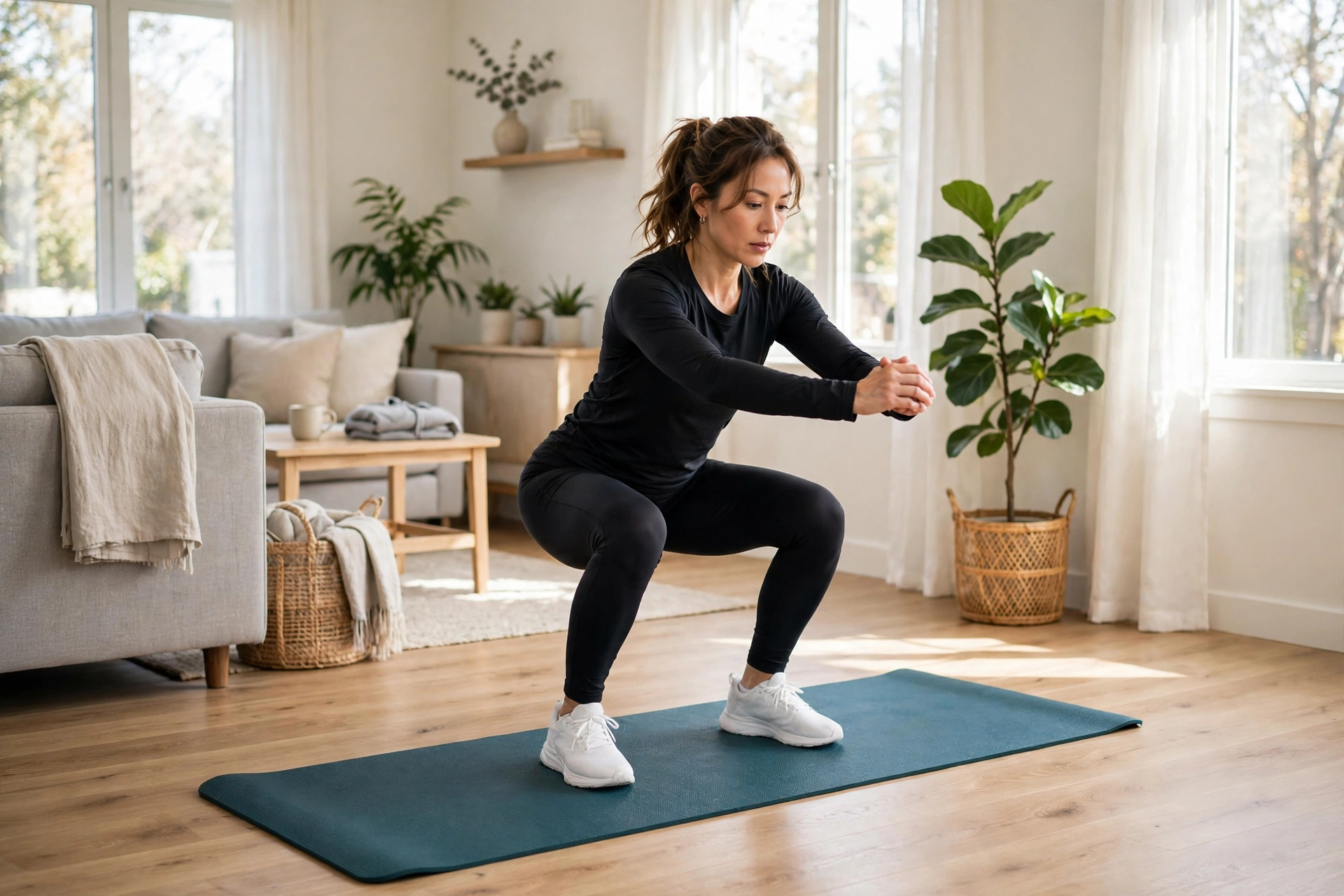
    Stand with feet shoulder-width apart. Bend your knees and push your hips back as if sitting into a chair, then stand back up. Keep your chest up. If full squats feel hard, only go halfway down.

    2. Wall push-ups

    Stand facing a wall, arms length away. Place your hands flat on the wall at shoulder height. Bend your elbows to bring your chest toward the wall, then push back. This is a gentler version of a floor push-up and a great place to start.

    3. Step-back lunges

    Stand tall, then step one foot back and bend both knees until your back knee nearly touches the floor. Push back to standing and switch legs. Hold a chair for balance if you need to.

    4. Standing knee raises

    Stand tall and lift one knee toward your chest, then lower it and lift the other. Keep a steady rhythm. This works your core and balance without getting on the floor.

    5. Glute bridges

    Lie on your back with knees bent and feet flat on the floor. Press through your heels to lift your hips, squeeze for a second, then lower slowly. This strengthens your hips and lower back.

    6. Dead bugs

    Lie on your back with arms pointing up and knees bent at a right angle. Slowly lower one arm behind you and the opposite leg forward, then return and switch sides. Move slowly and keep your lower back pressed gently to the floor.

    Cool-down (3 minutes)

    Finish with gentle stretching. Sit or stand tall and stretch your arms overhead, then stretch each leg gently. Take slow, deep breaths and let your heart rate come down. Stretching at the end helps you feel loose rather than stiff the next day.

    How to make it a habit

    Aim for this routine three days a week, with a rest day in between. As it gets easier, you can add a third round, hold each move a little longer, or try the harder version of an exercise. Progress does not have to be fast — it just has to be steady.
    Twenty minutes, no equipment, no commute. That is all it takes to start building strength and energy at home. Try it today, and see how you feel afterwards.
    This article is for general information only and is not medical advice.
  • 5 Quick Healthy Breakfast Recipes for Busy Mornings

    5 Quick Healthy Breakfast Recipes for Busy Mornings

    Mornings are busy, and breakfast is often the first thing to get skipped. But a good breakfast does not have to take long. These five recipes each take about ten minutes or less, use simple ingredients, and will keep you full until lunch.

    1. Overnight Oats

    Prep this the night before and grab it straight from the fridge.
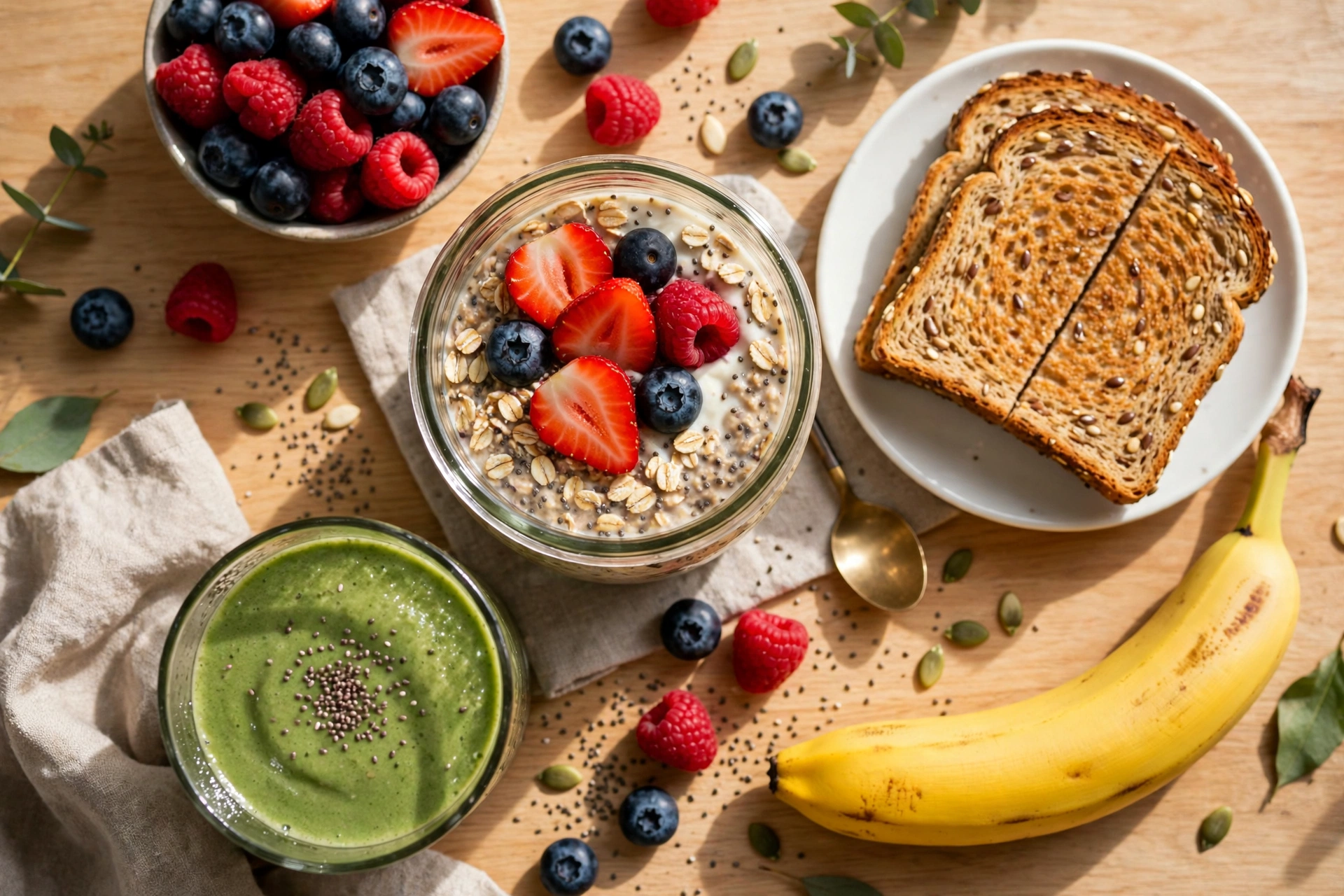
    Mix half a cup of oats with half a cup of milk or yoghurt in a jar. Add a spoonful of honey, a handful of berries, and a sprinkle of nuts or seeds. Stir, cover, and refrigerate overnight. In the morning, just eat it cold or warm it for a minute. It is filling, easy, and endlessly customisable.

    2. Peanut Butter Banana Toast

    A classic for a reason — quick, tasty, and satisfying.
    Toast a slice of whole-grain bread. Spread it with peanut butter, then top with sliced banana. Add a drizzle of honey or a sprinkle of cinnamon if you like. The combination of whole grains, healthy fats, and fruit keeps you going through a busy morning.

    3. Veggie Egg Scramble

    Protein-packed and ready in five minutes.
    Whisk two eggs in a bowl. Heat a little oil in a pan, add a handful of chopped spinach, tomatoes, or peppers, and cook for a minute. Pour in the eggs and stir until just set. Season with salt and pepper. Serve on its own or with a slice of toast.

    4. Berry Yoghurt Bowl

    Fresh, light, and ready in two minutes.
    Spoon plain yoghurt into a bowl. Top with a handful of mixed berries, a spoonful of granola, and a few nuts or seeds. If you like it sweeter, add a small drizzle of honey. This one is great on hot mornings when you want something cool and refreshing.

    5. Banana Oat Smoothie

    Breakfast you can drink on the way out the door.
    Blend one banana, half a cup of oats, a cup of milk, and a spoonful of peanut butter until smooth. Add a few ice cubes if you want it cold. Pour into a bottle and go. It tastes like a treat but works like a proper breakfast.

    Prep once, eat all week

    If your mornings are really tight, spend ten minutes on Sunday to make the week easier. Make two or three jars of overnight oats at once, chop fruit into containers, and boil a few eggs to keep in the fridge. A boiled egg with a piece of fruit is a perfectly good breakfast on the busiest days. When the healthy option is the easy option, you will reach for it without thinking.

    A few busy-morning tips

    Keep your pantry stocked with the basics — oats, eggs, whole-grain bread, peanut butter, yoghurt, and fruit — so you are never stuck. Prep what you can the night before, and keep your recipes simple. Healthy eating is not about fancy ingredients; it is about small, repeatable choices.
    Try one of these recipes tomorrow morning. You might be surprised how much better your day feels when it starts with a real breakfast.
    This article is for general information only and is not medical advice.
  • 10 Simple Fitness Tips for Beginners Who Hate the Gym

    10 Simple Fitness Tips for Beginners Who Hate the Gym

    If the thought of a crowded gym makes you want to stay on the couch, you are not alone. Plenty of people want to get fitter but hate treadmills, mirrors, and waiting for equipment. The good news is that fitness does not have to start in a gym at all. It starts with small, doable habits you actually enjoy.
    Here are ten simple tips to help you begin.

    1. Start with just 10 minutes a day

    You do not need an hour-long workout to make progress. Ten minutes of walking, stretching, or light movement is a real start. Once it feels easy, you can slowly add more time. Consistency beats intensity when you are just beginning.

    2. Pick movement you actually like

    If you hate running, do not run. Try dancing in your living room, cycling, swimming, gardening, or playing a sport with friends. When you enjoy the activity, you are far more likely to keep doing it.

    3. Walk more, everywhere

    Walking is one of the easiest and most underrated forms of exercise. Take the stairs, park a little further away, or go for a short walk after dinner. Those extra steps add up over the day without feeling like a workout.

    4. Set a tiny, specific goal

    Instead of saying “I want to get fit,” try something concrete like “I will walk for 15 minutes after lunch, three days this week.” Small, clear goals are easier to hit, and each win builds your confidence.

    5. Exercise at home

    Your living room is a perfectly good gym. Bodyweight moves like squats, wall push-ups, and gentle stretching need no equipment and no commute. Put on some music and make it a short daily routine.

    6. Find a workout buddy

    Exercising with a friend, family member, or even a neighbour makes it more fun and harder to skip. You keep each other motivated, and the time passes faster when you are chatting along the way.

    7. Schedule it like an appointment

    Treat your movement time the same way you treat a meeting. Pick a time that suits your day, put it in your calendar, and protect it. Morning, lunch break, or evening — whatever you can stick to is the right time.

    8. Track your progress simply

    You do not need a fancy app. A notebook or a note on your phone works fine. Write down what you did each day — how long you walked, how many squats you did. Watching your progress grow is surprisingly motivating.

    9. Rest and recover

    Rest days are part of fitness, not a sign of laziness. Your body needs time to recover, especially when you are starting out. If you feel sore or tired, take a gentle day with a slow walk or stretching instead of pushing through.

    10. Be patient with yourself

    Fitness is a long game. Some weeks will feel great and others will feel slow, and that is normal. Missing a day does not undo your progress. Just pick up where you left off and keep going.

    The bottom line

    You do not need a gym membership, expensive gear, or a perfect plan to get fitter. You need a small start, an activity you enjoy, and a routine you can repeat. Pick one tip from this list and try it today — that first step is the hardest, and you have already taken it by reading this far.
    This article is for general information only and is not medical advice.

  • Hello world!

    Welcome to WordPress. This is your first post. Edit or delete it, then start writing!